Skip to content

Who I help / Young professionals

You are the cheapest you will ever be to insure.

Not the person who needs cover most. The person who can buy it for the least. Those are different arguments, and at twenty six only one of them is urgent.

Free · About 5 minutes · No obligation

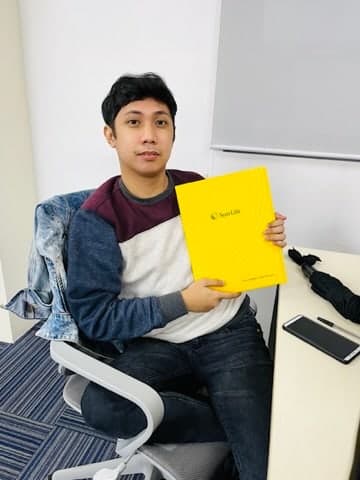
A young client seated with his newly issued Sun Life policy

WHAT THE SURVEY FINDS

What the survey turns up at your age

  1. 01

    You have never read your own benefits

    There is an HMO card in your wallet and a group life certificate in an HR portal you have logged into once. Neither of them is a mystery. You have simply never opened them, so you cannot say what they cover or what they leave out.

  2. 02

    Your price is being quoted on today’s body

    Insurers price on your age and health at signing, and that price is then locked. Every year you wait, you are buying the same cover from a slightly older, slightly more expensive version of yourself.

  3. 03

    Insurability is not a permanent condition

    One diagnosis, even a manageable one, can move you from standard rates to loaded rates to declined outright. What you are really buying at twenty six is not cover. It is the right to be covered later.

  4. 04

    Nobody has asked what any of it is for

    You are saving. Possibly investing. Almost certainly without a number attached to either. A goal you cannot say out loud is very hard to fund on purpose.

AFTER THE SURVEY

What actually changes

Less than you might expect, and that is the point. At your stage the drawing is usually small, dull, and cheap: enough protection that a bad year cannot wipe you out, pointed at a goal you can name. Then you leave it alone and let it work. There is a genuine chance the survey says you should build an emergency fund first and come back to me in a year, in which case that is exactly what I will tell you.

WHAT GETS DRAWN

Six things a plan can hold. You will not need all six.

Which of these end up in your drawing is decided by what the survey turns up, not by what I would like to sell.

  • Income protection

    If your income stopped, this is what keeps the rent paid and the tuition current while the household works out what happens next. For a breadwinner it is the first thing we size and the last thing we cut.

  • Health protection

    Critical illness and hospitalisation cover that pays on diagnosis. The whole point is that the money arrives before the bills do, so nothing has to be sold in a hurry at the worst possible time.

  • Retirement planning

    Run your actual SSS figure and most people go quiet for a moment. This is the fund that closes the distance between that number and the life you had been quietly assuming.

  • Education planning

    Tuition arrives on a date you already know and it does not negotiate. Funding it deliberately is the difference between a plan and a scramble.

  • Investment planning

    Long term, pointed at a goal you can say out loud. Not a tip, not a flip, and not something you feel you have to check every morning.

  • Existing policy review

    Bring whatever you already own, from any company. I will read it properly and tell you what it does, what it does not, and whether it is worth keeping. Frequently it is, and that conversation costs you nothing.

SAID OUT LOUD

Young professionals, honestly

I have no dependents. Why would I need life insurance?

For pure death cover, quite possibly you do not yet, and I will say so plainly. What you might need is critical illness and disability cover, because those pay you while you are alive and unable to earn, which at your age is by far the likelier event. And separately you may want to lock in insurability while it is cheap. Those are three different questions. Most advisors collapse them into one so they can sell you the largest of the three.

Should I not just invest instead?

Very often, yes. If your emergency fund is thin, index funds and MP2 will do more for you than a policy will. Insurance protects a plan, it is not the plan itself. Anyone telling you a VUL beats plain investing on returns alone is either confused or counting on the fact that you are.

BEGIN

Start with what you already have.

Rodel Hermogenes reads every answer himself before you speak. It is free, it takes about 5 minutes, and it ends with a session booked at a time you pick.

  • Free, and free of any obligation to buy
  • Private. Your answers are not shared or sold
  • Ends with a plan, even when it ends without a policy
Start the free assessment

Free. About 5 minutes. No obligation.